
Pricing guide · Hydraulic fittings
Hydraulic Fittings Pricing Guide
Understand what actually drives hydraulic fitting pricing, avoid connection mistakes, and get quotes that are faster, clearer and more accurate.
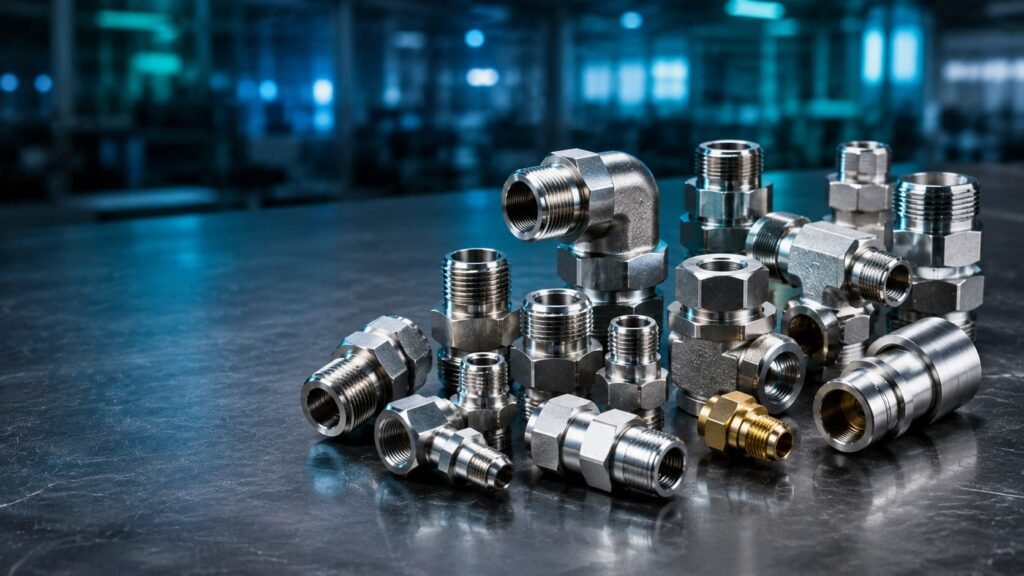
An elbow looks like an elbow — until thread form, sealing method, material grade or machining quality changes the price by several multiples. The right fitting is about how it connects and seals, not just its shape.
01 - Context - Why this Guide Exists
Why pricing varies in fittings
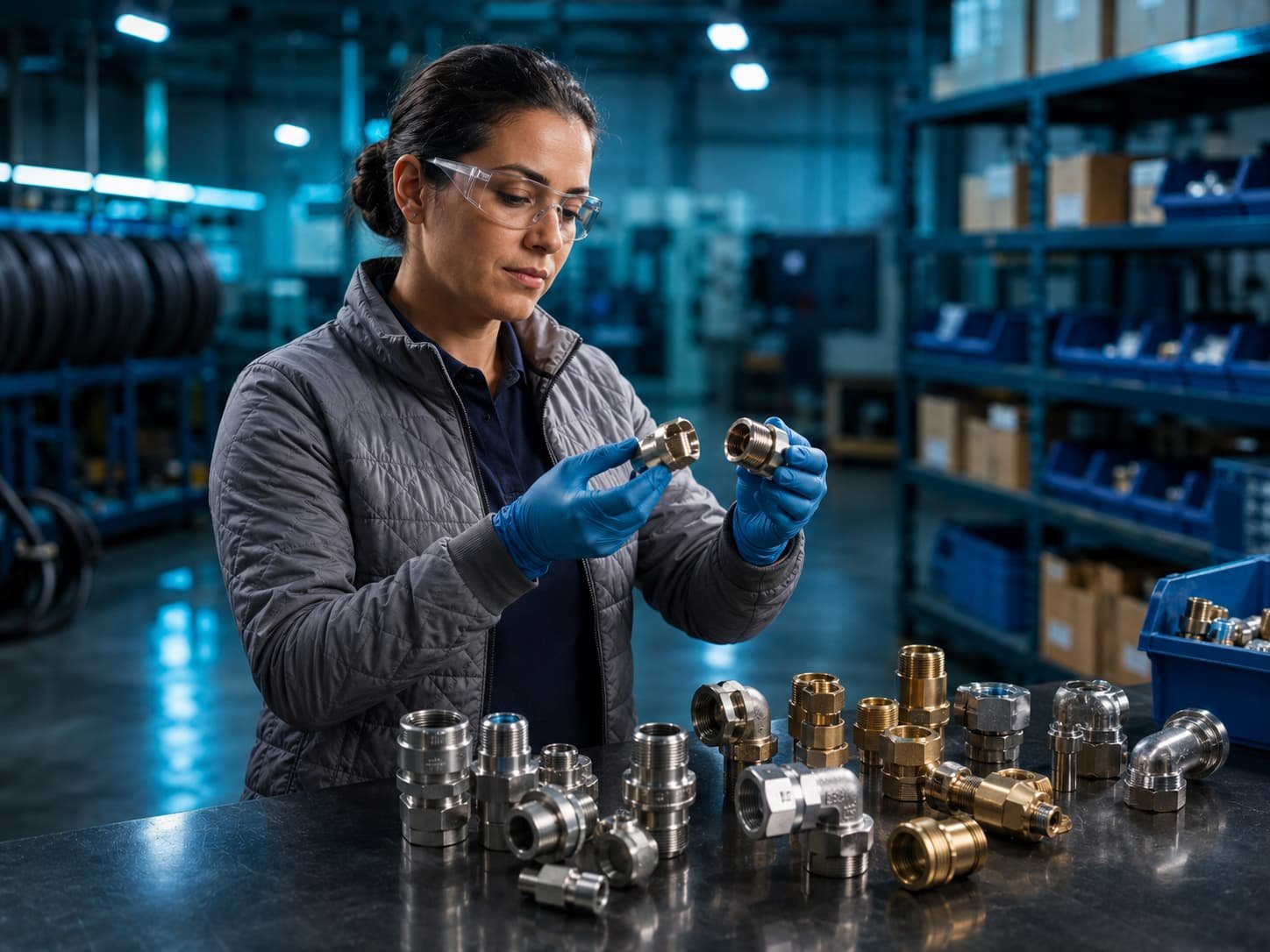
Hydraulic fittings look simple from the outside. But small differences in thread form, sealing method, material, pressure rating or machining quality decide whether the connection holds for years — or starts leaking on day one.
A fitting that is slightly cheaper upfront can become very expensive later when it causes leakage, thread mismatch, installation issues or premature failure. This guide breaks down what actually moves the price so you can specify, compare and buy with confidence.
- Understand why fitting prices vary.
- Identify what makes a fitting more or less expensive.
- Avoid common compatibility mistakes.
- Prepare clearer RFQs and compare suppliers fairly.
02 - Drivers
The biggest pricing drivers
01 Fitting type & geometry
What it is
Straight, elbow (45°/90°), tee, cross, union, reducer, adapter, plug, cap.
Increases price
↑ Elbows, tees, crosses and reducers — more material, machining and forging.
Decreases price
↓ Standard straight connectors machined from bar stock.
02 Thread type & connection standard
What it is
BSP, BSPT, NPT, NPTF, JIC 37°, ORFS, metric, SAE / ORB, DIN.
Increases price
↑ Specialty or low-volume thread forms requiring dedicated tooling.
Decreases price
↓ Common, high-volume thread standards in stock sizes.
03 Sealing method
What it is
Thread interference, O-ring, metal-to-metal flare, face seal, bonded washer.
Increases price
↑ O-ring, ORFS face seal and precision flare — extra parts & finer surfaces.
Decreases price
↓ Tapered thread sealing in low-pressure service.
04 Size & configuration
What it is
Thread, tube, hose and port size; same-size vs reducing.
Increases price
↑ Large, uncommon or reducing configurations with mixed ports.
Decreases price
↓ Common, same-size configurations in standard sizes.
05 Material
What it is
Carbon steel, stainless 304/316, brass, gunmetal, special alloys.
Increases price
↑ Stainless 316, brass, gunmetal or specialty alloys.
Decreases price
↓ Carbon steel for standard hydraulic service.
06 Pressure requirement
What it is
Working & burst pressure, wall thickness, sealing reliability.
Increases price
↑ High-pressure systems needing tighter tolerances and stronger materials.
Decreases price
↓ Low / medium pressure circuits with simpler construction.
07 Manufacturing method
What it is
Bar stock machining, forging + machining, casting (limited cases).
Increases price
↑ Forged, complex or tightly controlled fittings.
Decreases price
↓ Bar-stock machined standard fittings.
08 Surface treatment
What it is
Zinc / nickel plating, passivation, phosphate, anti-corrosion coatings, polishing.
Increases price
↑ Heavy-duty plating, marine coatings, polished finishes.
Decreases price
↓ Basic finish suitable for indoor / controlled use.
09 Standards & interchangeability
What it is
SAE, ISO, DIN, BSP, NPT, JIC, ORFS, metric families.
Increases price
↑ Strict interchangeability, customer-specific or non-standard parts.
Decreases price
↓ Common standardized fittings easy to source and replace.
10 Application & fluid compatibility
What it is
Fluid type, temperature, vibration, environment, safety class.
Increases price
↑ Marine, mining, chemical, high-temp or high-vibration service.
Decreases price
↓ Clean indoor systems on standard hydraulic oil.
11 Testing & quality control
What it is
Dimensional, thread and visual inspection; pressure test; traceability.
Increases price
↑ Pressure testing, batch traceability, third-party inspection.
Decreases price
↓ Standard in-line inspection per published spec.
12 Quantity & order pattern
What it is
One-off, prototype, bulk, mixed-size or scheduled call-offs.
Increases price
↑ Small mixed orders, prototypes and one-time buys.
Decreases price
↓ Bulk and repeat orders with planned annual usage.
13 Lead time & urgency
What it is
Standard production vs expedited supply.
Increases price
↑ Priority production, overtime and expedited logistics.
Decreases price
↓ Flexible lead times planned around standard production runs.
14 Packaging & delivery scope
What it is
Standard / export packing, labeling, rust protection, Incoterms.
Increases price
↑ Export packing, individual labeling and DDP-style delivery scope.
Decreases price
↓ Bulk local packing with Ex Works / FOB terms.
15 Raw material & currency
What it is
Steel, stainless, brass, nickel-linked alloys; FX exposure.
Increases price
↑ Volatile commodity prices and currency movement.
Decreases price
↓ Stable markets and locked-price contracts within validity.
03 - Spec builder
Spec checklist for your RFQ
Required
0 / 9
Helpful
0 / 10
Tip: copy your completed checklist into the RFQ form below or attach a P&ID and material datasheet for the fastest turnaround.
04 - Pitfalls
Common RFQ mistakes (and quick fixes)
Common Mistake
Quick Fix
Mixing thread standards
BSP, NPT, JIC, ORFS, metric, and other standards can look similar but are not automatically interchangeable.
Confirm the exact thread standard
Share thread type, size, sealing method, and mating component details to avoid mismatch and leakage.
Selecting by appearance only
Two fittings may look similar but differ in pressure rating, thread profile, seal type, or dimensional tolerance.
Validate technical compatibility
Match the fitting by standard, pressure, material, seal type, and application, not just visual similarity.
Missing material requirements
Incorrect material selection can lead to corrosion, durability issues, or poor fluid compatibility.
Specify material and environment
Share material preference, fluid type, corrosion exposure, operating pressure, and external conditions.
Incomplete dimensional details
Missing sizes, drawings, or reference information can lead to delays, rework, or incorrect sourcing.
Share clear references
Provide thread size, tube or hose size, drawings, part number, sample photos, or existing fitting details where available.
05 - Downloads
Helpful Resources to Enable Your Decision Making
- XLSX File
A structured template to help you share fitting requirements clearly and reduce mismatch risk
- XLSX File
Fittings Technical Specs
Reference material for thread standards, sealing types, materials, and specification inputs.
- PDF File

06 - Quote
Request a quote
Required specs still missing
Fitting type (adapter, elbow, tee, flange, coupling, etc.) • Thread/connection standard (NPT, BSPP, JIC, SAE, metric) • Size / nominal bore • Material (brass, steel, stainless) • Pressure rating • Application / media
07 - Process
What happens next
01
Requirement Review & Evaluation
We review fitting type, thread standard, dimensions, pressure conditions, material requirements, and application details.
02
Compatibility Validation
We check connection compatibility, sealing method, material suitability, and technical fit before moving forward.
03
Supplier Coordination & Planning
Approved requirements move into supplier coordination, availability checks, pricing review, and sourcing planning.
04
Manufacturing or Sourcing Execution
Depending on the requirement, fittings are sourced, machined, finished, or coordinated with suitable manufacturing partners.
05
Inspection & Verification
Components are checked for dimensional consistency, thread accuracy, finish quality, and specification alignment before dispatch.
06
Packaging & Delivery
We coordinate packing, labeling, documentation where applicable, and delivery tracking for smooth procurement execution.